Photographing the Lysefjord from a boat
The Lysefjord is easy to photograph and hard to photograph well. Deep shade under bright sky fools a camera set up for a city break, and Preikestolen sits 604 m (1,982 ft) above your head. A few decisions about where you stand and what you carry make the difference.
Light in a deep, narrow fjord
The Lysefjord's walls rise about 1,000 m (3,300 ft) from the water, and the fjord is narrow enough that the sun reaches its surface only for part of the day. Often one side glows while the other sits in deep shade. That contrast is the main challenge. A phone handles it well in HDR mode, which most switch on automatically. With a camera, expose for the bright rock or the sky and lift the shadows later, since burnt-out highlights cannot be rescued.
Overcast days are common in Stavanger, and they are kinder than people expect. Soft light shows the texture of the granite and the white of the waterfalls without hard shadows. Low cloud can hide the top of Preikestolen (Pulpit Rock), though, and the weather guide covers what that means for the trip.
Time of year changes the light more than time of day. Around midsummer the sun stands high enough to reach much of the water at midday. In midwinter it barely clears the ridges, and much of the fjord stays in shade. Rødne's winter sailing leaves at 11 am and is back about 2:30 pm, close to the early sunset of late December, so the trip home can come in warm, low light. Our seasons guide has the full timetable.
Where to stand on the big boats
On Rødne's electric catamaran from ~$92 the sun deck is the place for photos, and the panoramic windows below give a dry backup on a wet day. Helgøy's catamaran has an outdoor deck as well as its heated lounge. Outside, you get clean shots with no glass in the way. Inside, press the lens close to the window and switch off the flash. Dark clothing keeps your own reflection out of the glass.
In peak summer Rødne reviewers describe crowded decks, so claim a spot at the rail early, before the boat passes under the Lysefjord bridge. When the boat stops below a sight, move to the side that faces it rather than shooting across other people's heads. Where the crew lets passengers stand at the bow, it gives the clearest view of the approach to the waterfall, spray included.
Shooting up at Preikestolen
From the water, Preikestolen is a square-topped block at the top of a 604 m wall. The boats stop below it, and you look straight up at the edge where hikers stand. A wide lens or your phone's ultra-wide setting fits the whole cliff, and turning the camera to a vertical frame shows the height better than a horizontal one.
The people on top are the detail that sells the picture. From the boat they look like dots, so use the longest lens you have and scan the edge. A phone at its telephoto setting will find them, and even a small figure against the sky gives the cliff its scale. Include a strip of water or a bit of the boat's rail at the bottom of the frame to show where you are. Our guide to Pulpit Rock from the water explains what you see from below compared with the hike.
Fantahålo and the waterfall
Fantahålo, the Vagabond's Cave, is a narrow gap in the cliff, and a vertical frame suits it better than a wide one. Stops can be short. FjordEvents lists a five-minute photo stop there, so have the camera ready before the boat slows down.
Hengjanefossen, better known as "Whisky Falls", is where gear gets wet. Take your shots on the approach, then put the camera away or under your jacket before the boat noses into the spray. A microfiber cloth in a dry pocket saves the rest of the trip, because a single drop on the lens will blur every photo after it. A short video clip of the boat pushing into the falls often tells the story better than a still. Our guide to the sights lists them in the order you pass them.
More deck time for the camera
Rødne's 3.5-hour cruise from ~$92 is the longest trip on this site. The quiet electric catamaran has a sun deck above its panoramic windows. It runs all year, and the goats often come down to the shore in spring and summer.
Cameras on a RIB
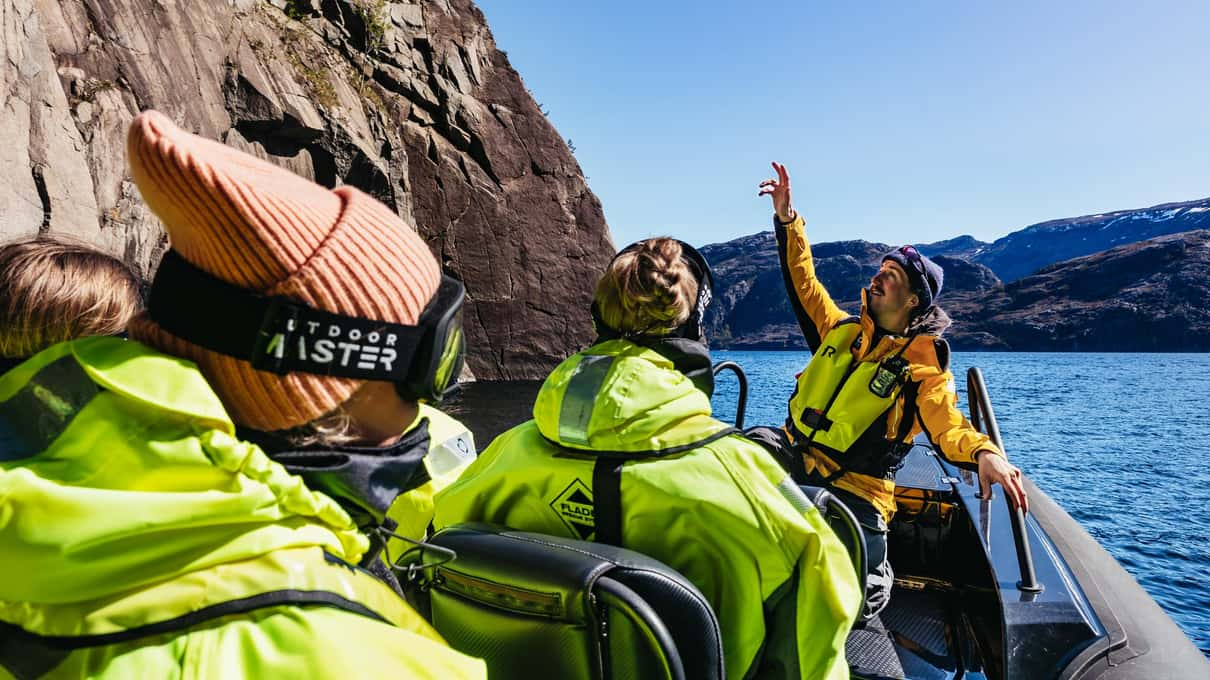
On a RIB you need one hand for the grab handle for much of the ride, which rules out heavy cameras. A large camera with a long lens gets drenched and is hard to hold steady at speed. Most people do fine with a phone on a wrist strap or a lanyard, kept in a waterproof pouch during the 30-minute run to the fjord and taken out when the skipper slows down. FjordEvents asks guests to secure phones and cameras, and the borrowed gloves make touchscreens awkward, so practice with them before the boat leaves.
The stops are where RIB photos happen. Stavanger RIB from ~$145 plans about 45 minutes of sightseeing and wildlife inside the fjord, with small groups of up to 12, so there is room to move. On Fjord Xplore's adventure boat from ~$166 the seats are roomier and the sun-top gives some cover, a middle ground for anyone who wants speed without a soaked phone. Our boat comparison sets the RIBs against the big catamarans.
Goats and other wildlife
In spring and summer Rødne's two goats (Gunnar and Sigve) come down to the water to meet the boat, and Stavanger RIB reviewers have met a pair called "Salt & Pepper". Shoot them from as low as you can, close to their eye level, with a fast shutter, since they rarely stand still.
On some trips you may also see white-tailed eagles or seals. The eagles need the longest lens you have (200 mm or more on a camera, or the top zoom setting on a phone). Seals rest on rocks near the shore, while porpoises surface for a second or two, so burst mode gives you the best odds. Nothing is guaranteed. One FjordEvents reviewer saw no wildlife at all.
Drones and tripods
Do not plan on flying a drone from a tour boat. None of these listings offers it, and launching from a moving deck among other passengers is not something to count on. If you really want aerial shots, ask the operator before you pack one, and check Norway's drone rules for wherever you plan to fly on land. A tripod is no use on a moving deck either. Raise the shutter speed to 1/500 s or faster and brace against the rail instead.
Cold fingers make for shaky photos, so dress warmly enough to keep the camera out. If a rough crossing worries you more than the light, our seasickness guide explains which boats ride most smoothly.